

Uncensored Free Speech Platform

Why the U.S. Constitution Exists
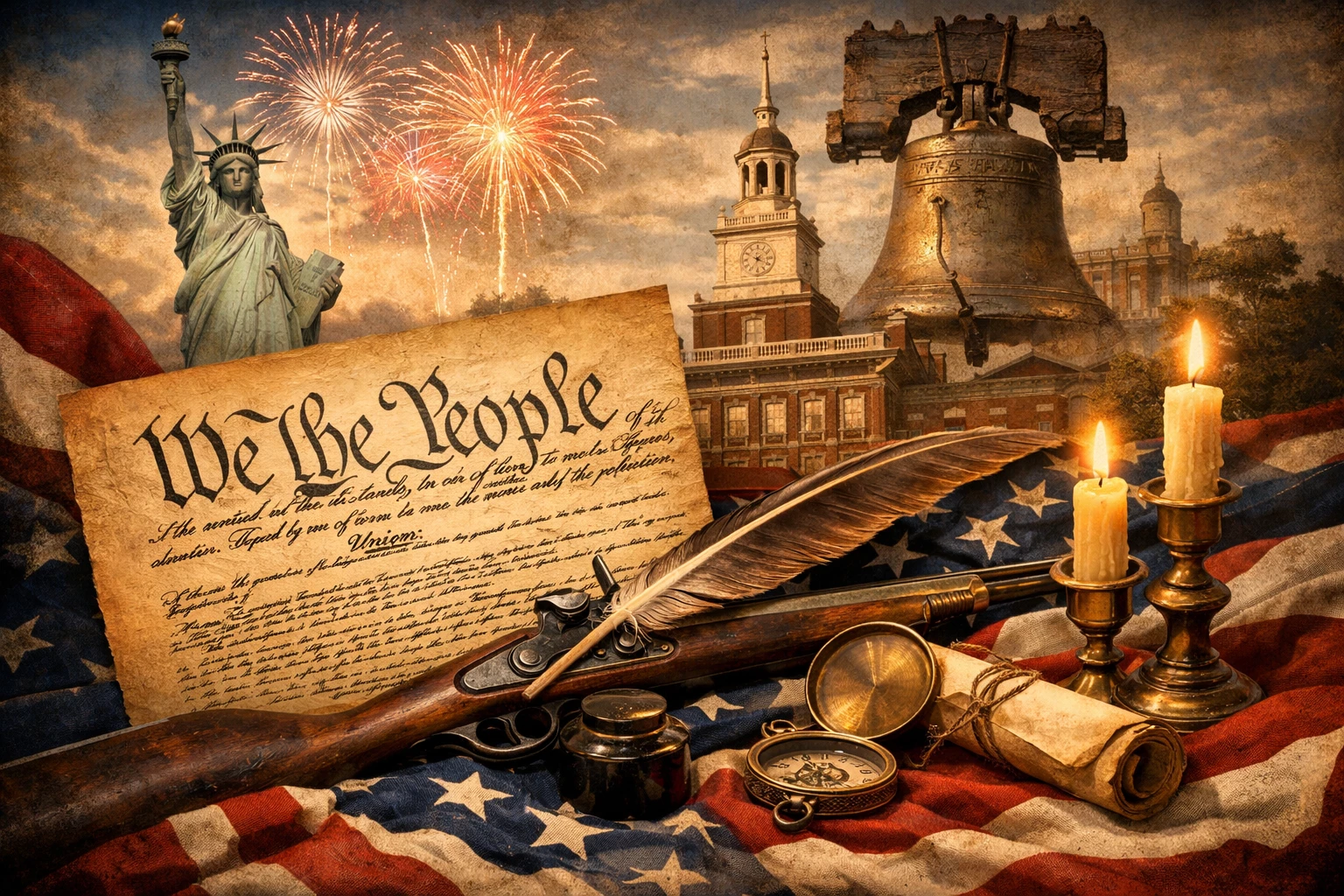
Why the U.S. Constitution Exists
When the United States won its independence, freedom was secured — but stability was not. The nation’s first system of government quickly proved incapable of governing a growing republic. The U.S. Constitution was born not out of theory, but necessity.
This article explains why the Constitution exists, what failed before it, and why the Founders chose an entirely new framework for government.
US Government Before the Constitution
After independence, the United States operated under the Articles of Confederation, a system intentionally designed to keep the national government weak. Fear of tyranny shaped every decision.
Unfortunately, weakness created chaos.
Major Problems Under the Articles
-
No power to tax citizens
-
No executive branch to enforce laws
-
No national court system
-
No ability to regulate interstate commerce
-
States acted like independent countries
The federal government could declare laws — but had no way to enforce them.
⚠️ A Nation on the Brink
By the mid-1780s, economic instability and unrest exposed the dangers of a powerless government. States issued their own currencies, trade disputes erupted, and debts went unpaid.
The breaking point came when armed citizens rebelled against state courts over debt enforcement.
The national government could not intervene.
This moment convinced many leaders that liberty without order would not survive.
🏛️ The Constitutional Convention of 1787
Delegates met in Philadelphia originally intending to revise the Articles. Instead, they reached a radical conclusion:
The system itself was broken.
Their challenge was unprecedented:
-
Create a government strong enough to function
-
Prevent that government from becoming tyrannical
-
Protect individual rights
-
Preserve state authority
The result was not just a new government — but a new philosophy of power.
⚖️ The Core Compromise
The Constitution answered one critical question:
How do we empower government without endangering liberty?
The solution:
-
Dividing power among branches
-
Forcing cooperation and restraint
-
Limiting authority through a written document
-
Placing sovereignty with the people, not rulers
This balance remains the foundation of American government today.
📊 Before and After: A Visual Comparison
| Feature | Articles of Confederation | U.S. Constitution |
|---|---|---|
| Power to tax | ❌ No | ✅ Yes |
| Executive branch | ❌ None | ✅ President |
| National courts | ❌ None | ✅ Supreme Court |
| Enforce laws | ❌ Weak | ✅ Strong |
| State unity | ❌ Fragmented | ✅ Unified |
🧠 Case Study: Shays’ Rebellion
In 1786, farmers burdened by debt and taxes revolted against state courts. With no national army or enforcement authority, the federal government was powerless to act.
Why it mattered:
A government unable to maintain order cannot protect freedom. This event directly influenced the creation of the Constitution.
❓ Quick Knowledge Check
1. What was the main weakness of the Articles of Confederation?
➡️ A weak national government
2. Which power did the federal government lack?
➡️ The power to tax
3. What event helped push leaders toward a new Constitution?
➡️ Shays’ Rebellion
4. What problem was the Constitution designed to solve?
➡️ Balancing authority and liberty
✍️ Reader Reflection
We would very much like to hear your comments. Please take a moment to comment with your take on the subject. All veiws are welcome.
🧾 Final Thoughts
The U.S. Constitution was not written to centralize power — it was written to control it. Every article, clause, and limitation reflects a hard-learned lesson: freedom requires structure, and authority must always be restrained.
📌 Coming Next Week
Core Constitutional Principles: Popular Sovereignty, Federalism, and Separation of Powers

